INTRODUCTION
Background of the Children

Vanessa Anak Frankie
Vanessa is an Iban kid, born on 29 December 2016. She is currently 4 years old and lives at Kampung Sungai Laru.

Allaister Benedict Salang
Allaister is an Iban kid and born on 8 March 2015. He is currently 5 years old and lives at Kampung Sungai Laru.
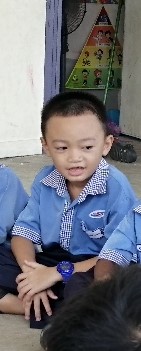
William Tagau Anak Nicholas
William is an Iban kid, born on 15 January 2014. He is currently 6 years old and lives at Kampung Sungai Laru.

Denish Anak Balan
Denish is an Iban kid and born on 20 August 2014. He is currently 6 years old and lives at Kampung Sungai Laru.
OBSERVATION
The experiment was conducted on preschool children of age range from 3 to 6 years old. We played games with the children in which the games is opt to enable us to observe the children’s development and milestones in three different dimensions that are physical, cognitive and psychosocial. During the experiment, we had identified 4 children who show us the most outstanding and wholesome observations when they were playing games.
The dimensions mentioned are Cognitive, Physical and Psycosocial
.
COGNITIVE
How the kids think, explore and figure out things. It is the development of knowledge, skills, problem solving and arrangements that help children think about their surrounding and understand it.
PHYSICAL
Includes both growth and the ability to use muscle and body parts for particular skills. Motor skills contribute to their physical development and children often adapt set of skills by certain age
PSYCHOSOCIAL
Combined contexts of psychological factors and social environment to evaluate one’s mental well-being and functioning ability in the areas.
EVALUATION ON CHILDREN
| Physical development | Cognitive development | Psychosocial development | |
| Vanessa | -seemed thin, however well built -kind of slow in doing physical tasks although she loves to run around | – very slow at understanding orders given -slow in doing cognitive tasks | – prefers to be alone and enjoys herself. |
| William | -physically fine -loves to join in physical activities such as running around and playing tag -enjoys playing with his peers | -well-developed cognitively -could understand tasks given and completes them easily | -tends to be shy in a crowd -however, he takes a short amount of time to be very close to the ones he just met -very social among his friends |
| Allaister | -approprite physical growth -very much enjoy physical activities -active when asked to dance or whenever a song was playing -possesses gross motor skills such as running, jumping, dancing as example in activity involve song -possesses fine motor skills, for example putting on the shoes | -moderately developed -understand instructions well -memorized alphabets and was able to tell colours apart – able to do simple addition -usage of clear words when speaking eventhough not in full sentences. However, he did sing when a song played | -quiet and a little bit introverted -he is socially reserved, however he enjoys observing other people -emotionally, the caregivers said that he cried every morning when he just arrived at the preschool -rewards (candy, chips) encouraged him to speak in front of his peers |
| Denish | -well grown physique -very physically active | -moderately developed cognition -understands instructions -could complete tasks although having some failed attempts | -knows how to socialize in a crowd -could get emotional sometimes when things do not go his was -overall, an outgoing child |
ANALYSIS
At the age range of 4 to 6, it is the time where the brain development at its peak. During this stage, children are highly influenced with their environment and people around them. As we observed when asking them on recommendation of songs, the children answered a song tittle “Nak tidur mana”. It is repeatly on the song queue when we are playing games since that it is the majority of them requested. As the song is played, they enjoyed it by dancing, sing and playact among them. This kind of physical development can be seen in Allisteir, William and Denish. When we change the song once a while, they not enjoyed it as much as the song “Nak tidur mana”. In this context, we can see one the milestone in early childhood development is they like to sing and dance as entertainment to them. Plus, they are able to recognize their favourite song and speak clearly what they want.
In the context of expressing their needs and fulfill their desire, the children able to tell what their want. As example, when the activities where conducted, some of them told one of us that they wanted to go to toilet, that they are hot and sweating and they wanted to drink some water. She called one of us and ask for permission to go toilet with clear and direct sentences. Other example in speaking clearly is when we ask them to introduce themselves in front of their friends in order for them to get the snacks. They able to tell their name and age in front of the crowds eventhough there are some of them showed a sign of lacking in confidences.
Erik Erikson’s stage development on Initiative vs. Guilt also can be observed among the preschool children. Initiative behaviour such as William and Danish, both of them know how to be socialised among their friend. They are able to communicate and having fun together in the activity. At this stage, it provides the children with the opportunity to explore their interpersonal skills through initiating activities. For Vanessa, she is on the other side of the coin. Her development in physical and cognitive is averagely at the low level than her friends. During the activity were conducted, Vanessa always be seen to isolate herself. At this context, guilt is reflected by the Vanessa behaviour towards the environment. However, on the bright side, Vanessa also is seen tried to be friendly towards her friends.
CONCLUSION
Early childhood is a crucial physical , cognitive, and psychosocial developmental period. It marks the acquisition of cognitive and language skills, the convergence of relationships with attachment and the development of a sense of self. The preschool child demonstrates more advanced physical skills, achieves greater coordination and enters a physically less threatening phase. As well as advances in physical growth, they acquire new thinking and language skills that define their cognitive development. Preschool years mark the first time parental separation occurs as the child transitions to kin caregivers, daycare, or preschool and learns how to manage that separation. In the early years, children also encounter the need to control their emotions and behaviours. Parents and caregivers have a key role to play in enabling children to develop self-regulation skills that they need to get along with peers and adults.
REFERENCES
Bee, H. (1992). The development of language. The developing child.
Berk, L. E. (1986). Development of private speech among preschool children. Early Child Development and Care, 24(1-2), 113-136.
National Center on Birth Defects and Developmental Disabilities, C. f. (2020, June 9). CDC. Retrieved from Learn the signs : https://www.cdc.gov/ncbddd/actearly/milestones/milestones-5yr.html
McLeod, S. (2018). Erik Erikson’s Stages of Psychosocial Development. Retrieved from SimplyPsychology: https://www.simplypsychology.org/Erik-Erikson.html

